Why I Built Stage Proof: A Gigging Musician's Story
The wind took my lyrics. That's what started this.
I've been playing gigs for years — bars, private events, company parties, weddings. And for most of that time, I had the same ritual before every show: print the song texts, sort them into the right order, clip them to the music stand, and pray there was no wind.
The prayer didn't always work. More than once I've watched a page sail off the stand mid-song, had to keep playing while chasing it across the stage, and hoped the audience thought it was part of the act. It wasn't.
The Kindle plan
I thought I'd solved it. No more paper — I'd load everything into a document and read from the Kindle. Neat, weatherproof, backlit. Problem solved.
Except it wasn't. Every time I glanced down at that little grey screen, I felt myself disconnect from the room. The eye contact, the energy, the connection with the audience — gone. I was performing at people instead of with them. The Kindle was killing my stage presence.
Actually learning the lyrics
So I tried the obvious thing: just memorize them properly. No crutch, no safety net.
Honestly? I was not good at this. I'd go over a song at home, feel confident, get on stage, and draw a complete blank on verse two. The harder I tried to recall it under the pressure of the spotlight, the further it slipped away.
I kept thinking: there must be a better way to practice this. Something structured that actually tests whether you know the lyrics — not just whether you can read them. Like Duolingo, but for songs.
I looked for an app. I couldn't find one that did what I wanted. So I built it.
Practice mode: active recall for lyrics
The core of Stage Proof is Practice Mode, built around active recall — the same learning technique used by medical students and language learners to make information stick under pressure.
It works like this: The app quizzes you for the songtexts with different modes, multiple choice, fill in the gaps, build a sentence or recall mode where you have to try to recall the next line without looking, then reveal the answer and rate yourself. Lines you struggle with get flagged and come back more often. Lines you nail get spaced out. After a few sessions, the lyrics stop being words you read and start being words you own.
Knowing what's actually ready
My old system had no memory. I'd learn a song, play it at a gig, not touch it for three weeks, and have no idea whether I still knew it by the time the next show came around.
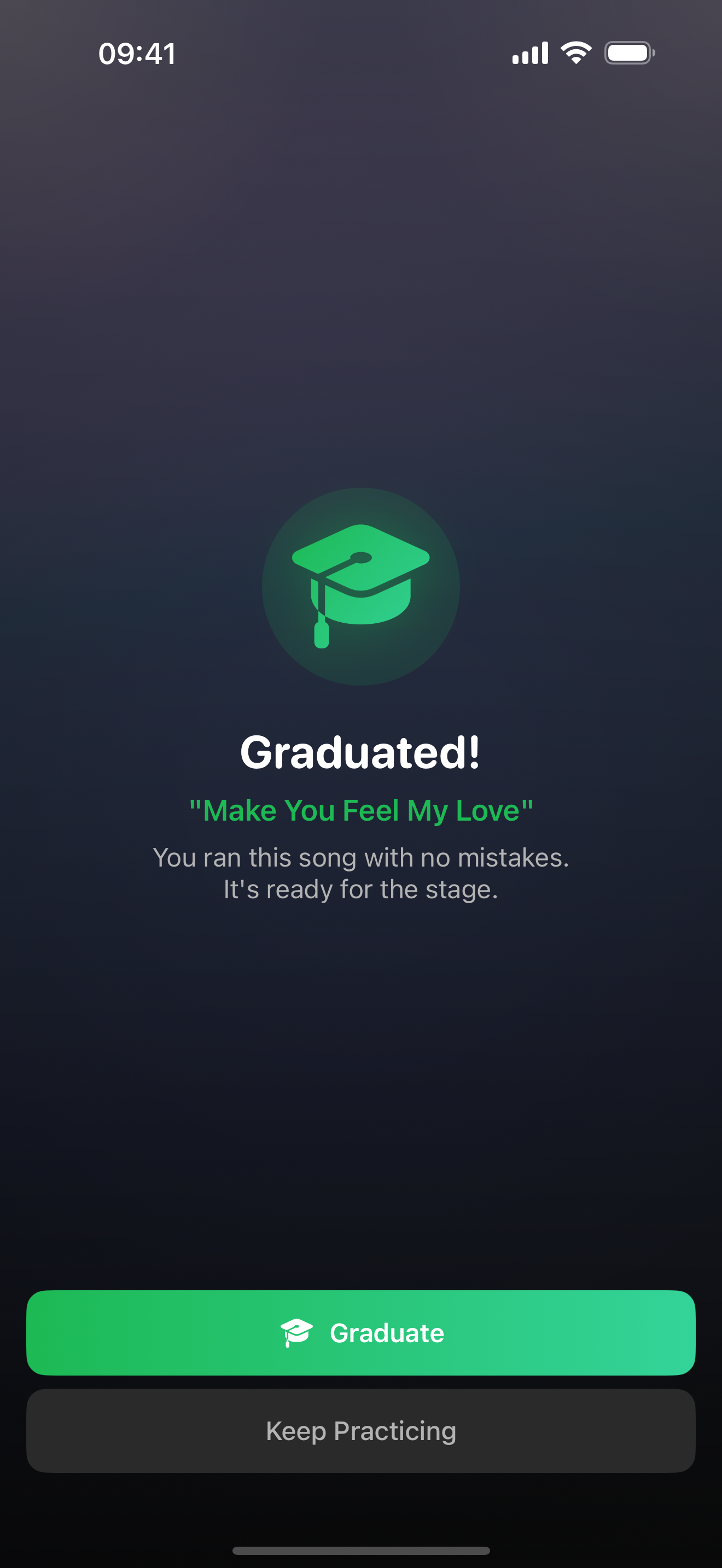
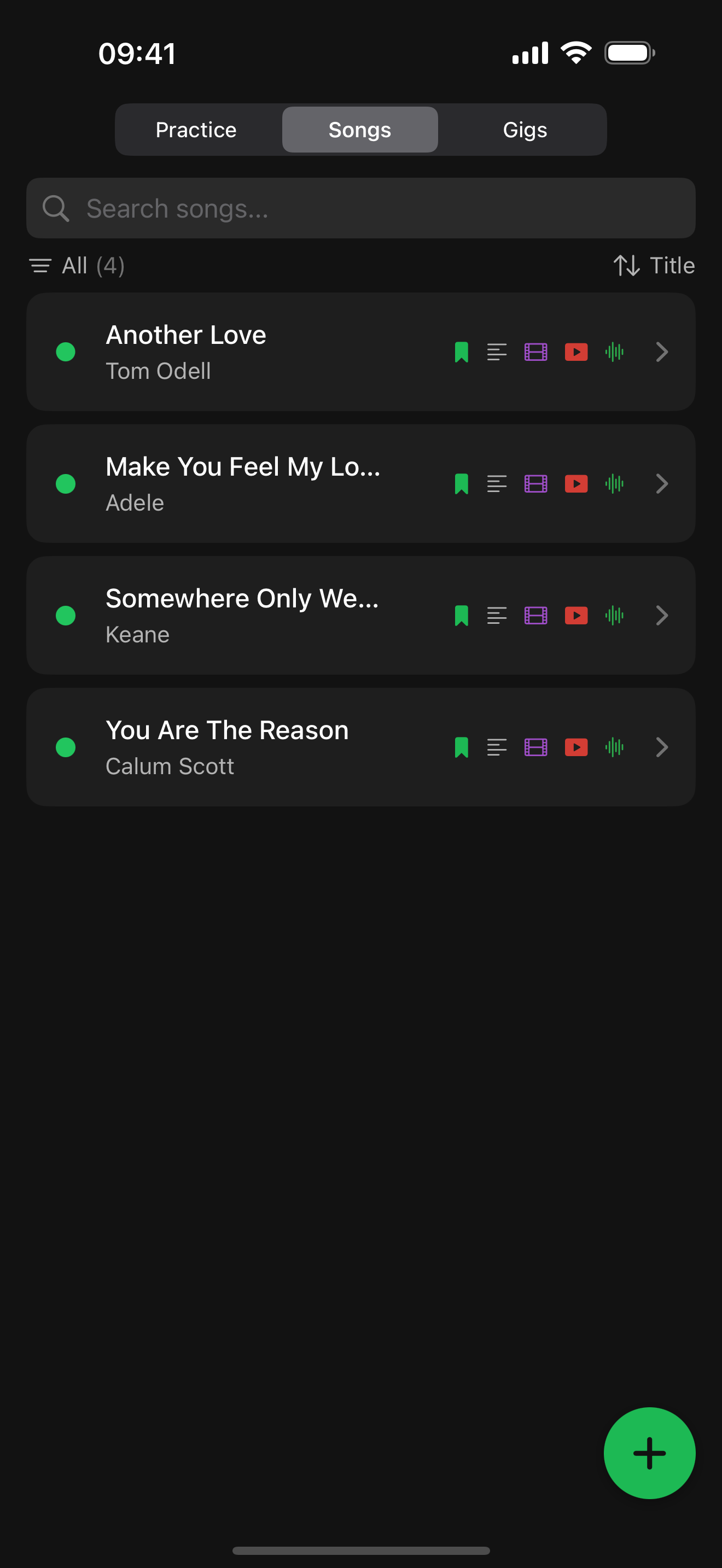
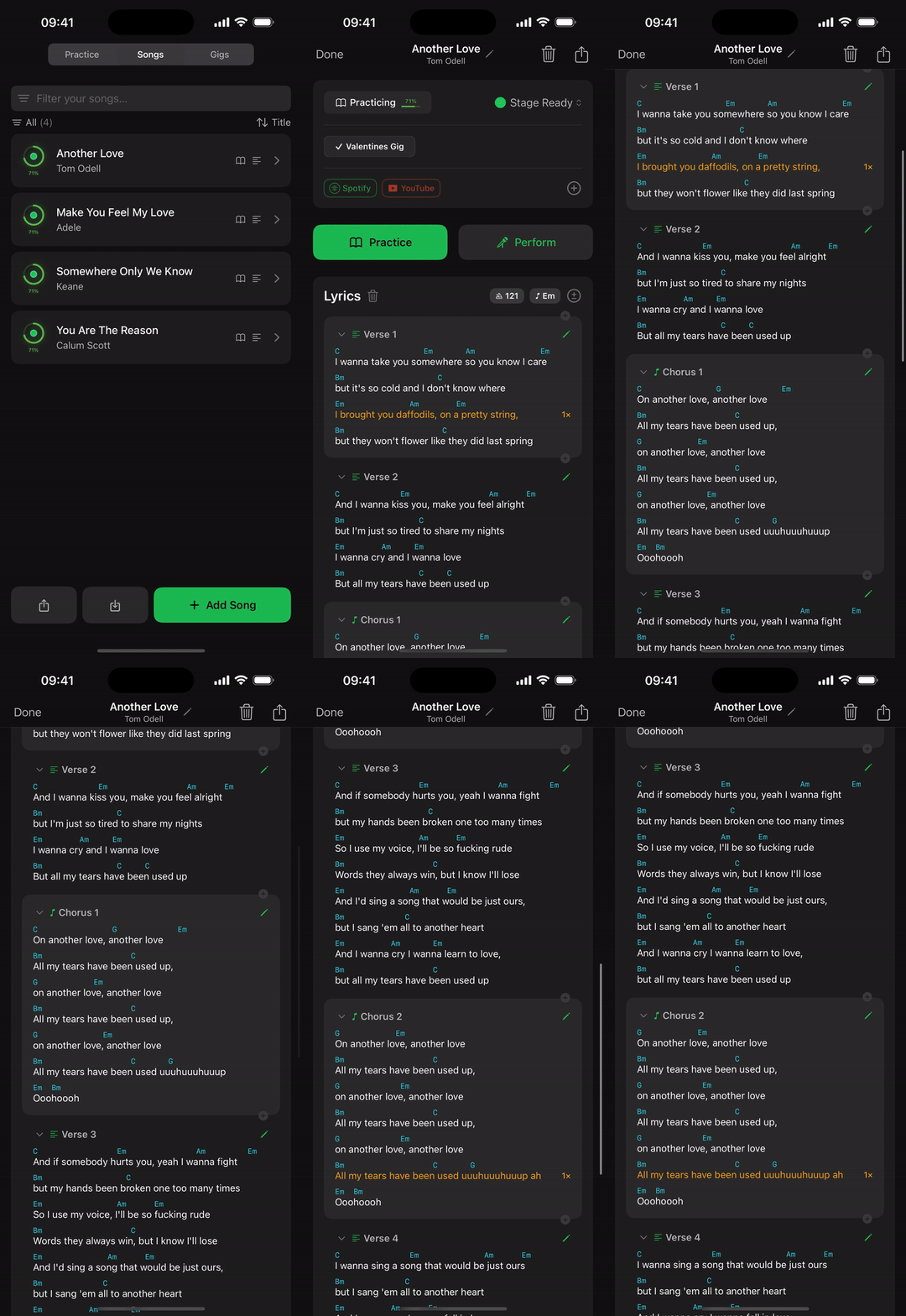
Stage Proof tracks every song in your library with a stage-readiness rating — a score that reflects how well you know it right now, not six weeks ago. At a glance you can see what's solid, what needs a brush-up, and what's not ready to perform.
Performance mode (for when you still blank)
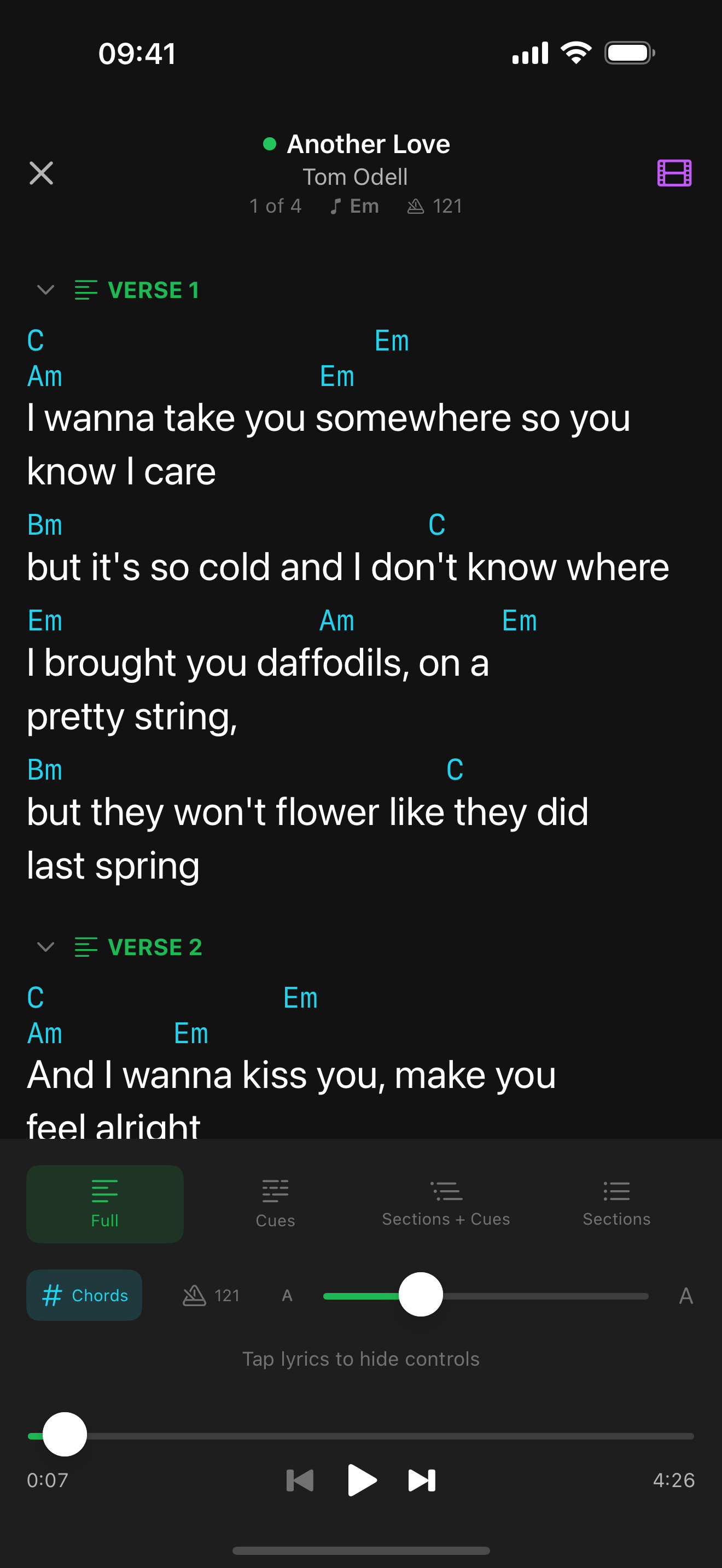
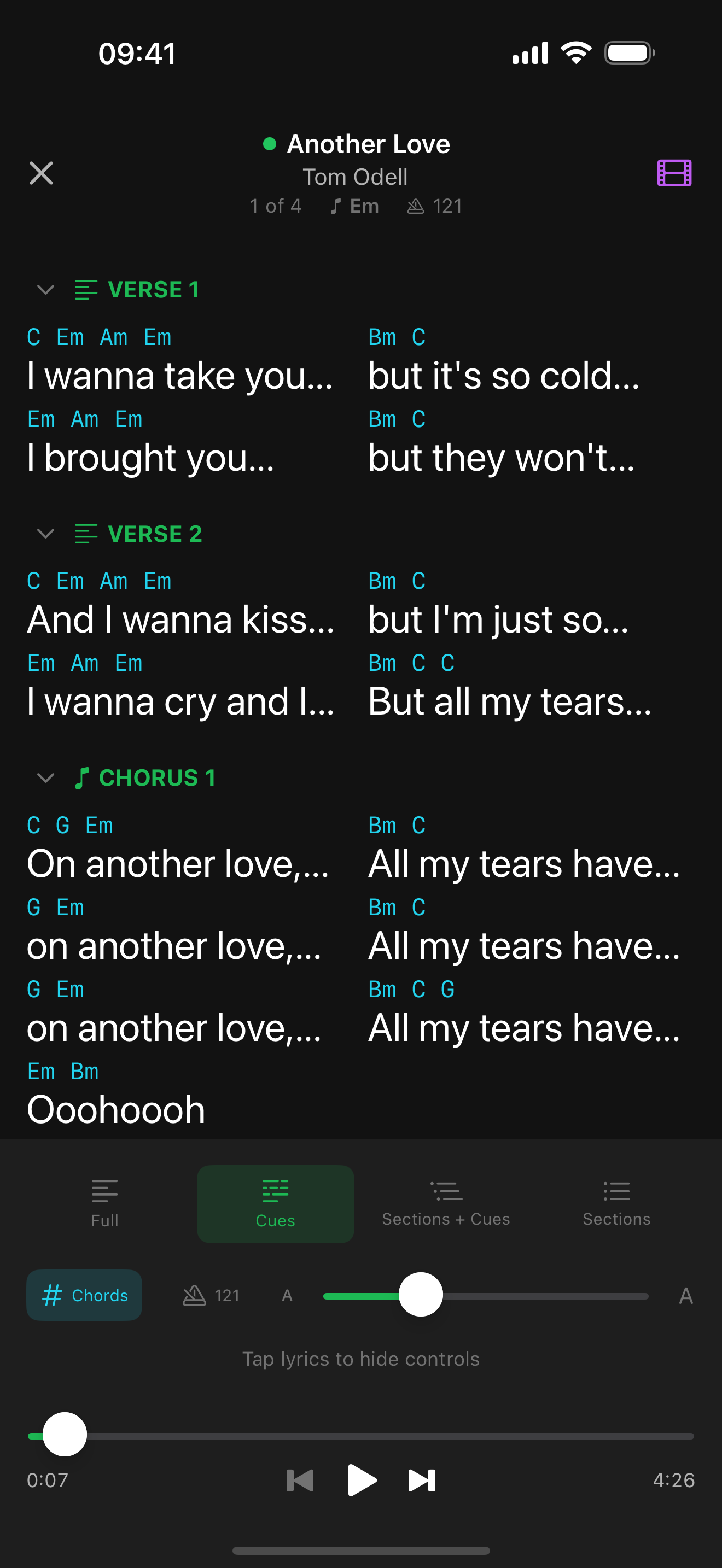
Even well-practiced lyrics can desert you when the nerves hit. So Stage Proof also has a Performance Mode — not a teleprompter you depend on, but a safety net for the moments you need one.
You can show full lyrics with chords, first-word cues only, section headers, or anything in between. The idea is to give yourself just enough to trigger the memory — not so much that you're reading instead of performing. The lyrics can automatically scroll in sync with your backing track or playback. You can resize the font and show or hide chords.
Backing tracks, built in
Most of my songs have a backing track — a rehearsal file or a karaoke version I practice against. Stage Proof lets you attach tracks directly to a song and play them back during practice or performance. No more switching between apps mid-session.
Transposing on the fly
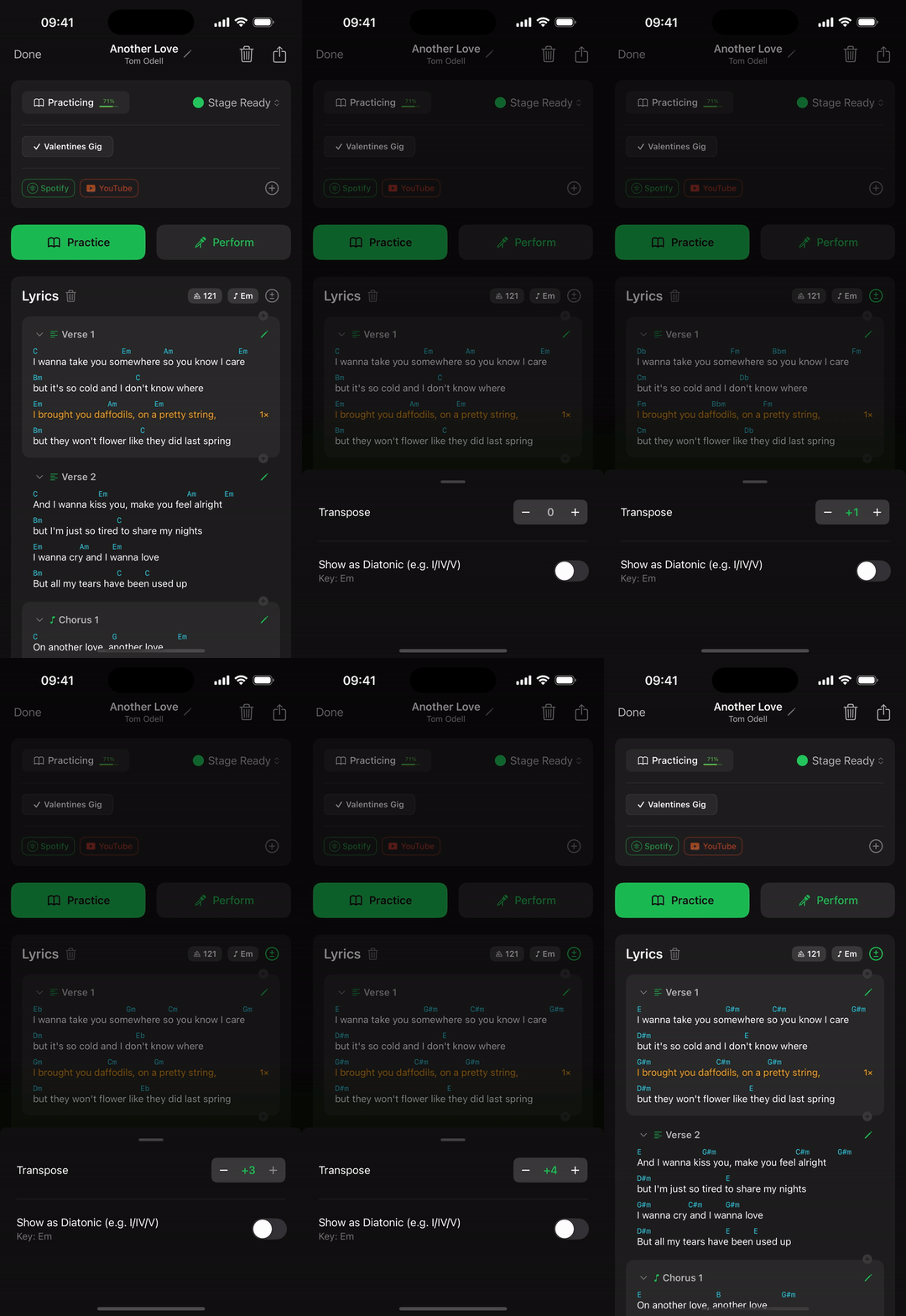
Playing a song in a different key than you practiced it? Transpose any song instantly and the entire chord chart updates — every section, every line. No more scribbled corrections on paper or hunting through a PDF.
What it's like now
I still get nervous before gigs. That hasn't changed. But the specific anxiety of "will I remember the words?" is gone. I walk on stage knowing exactly which songs I've put the work into and which ones I'd need a cue for — and I have the cue ready if I need it.
That's the goal. Not to make you dependent on your phone on stage. To make you confident enough that you don't need it.
Ready to stop worrying about lyrics?
